
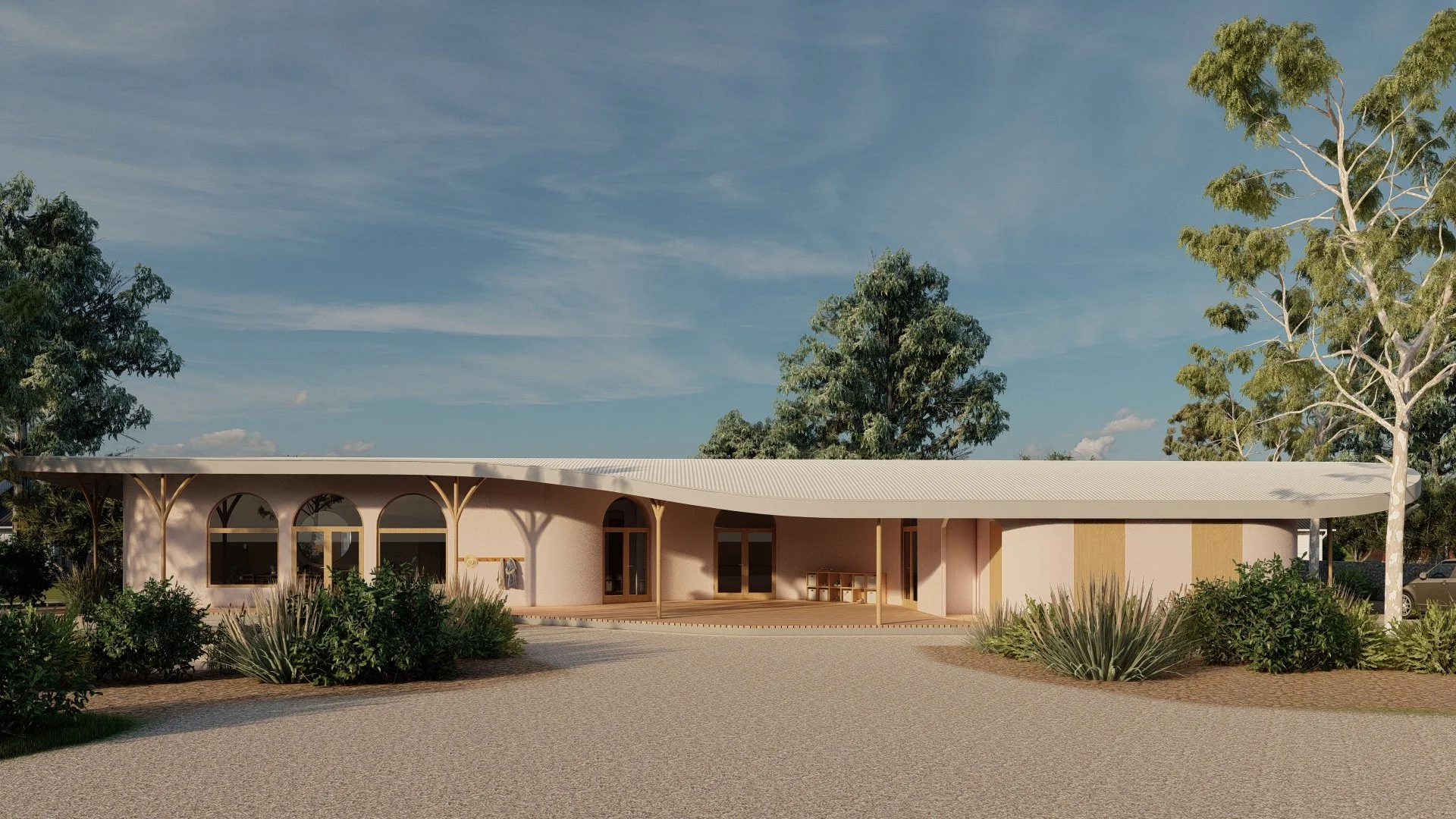
A High-Performance Learning Environment Rooted in Nature
Nollamara, Western Australia
Leanhaus was engaged to design a new kindergarten building for West Coast Steiner School, an environment that supports early childhood development through both spatial quality and building performance.
The project brings together two complementary frameworks: Anthroposophical architecture, grounded in the educational philosophy of Rudolf Steiner, and Passivhaus design, delivering a highly controlled, healthy internal environment for improved student performance outcomes.
The result is a building that is both expressive and precise; shaped by human experience, yet underpinned by rigorous building science.
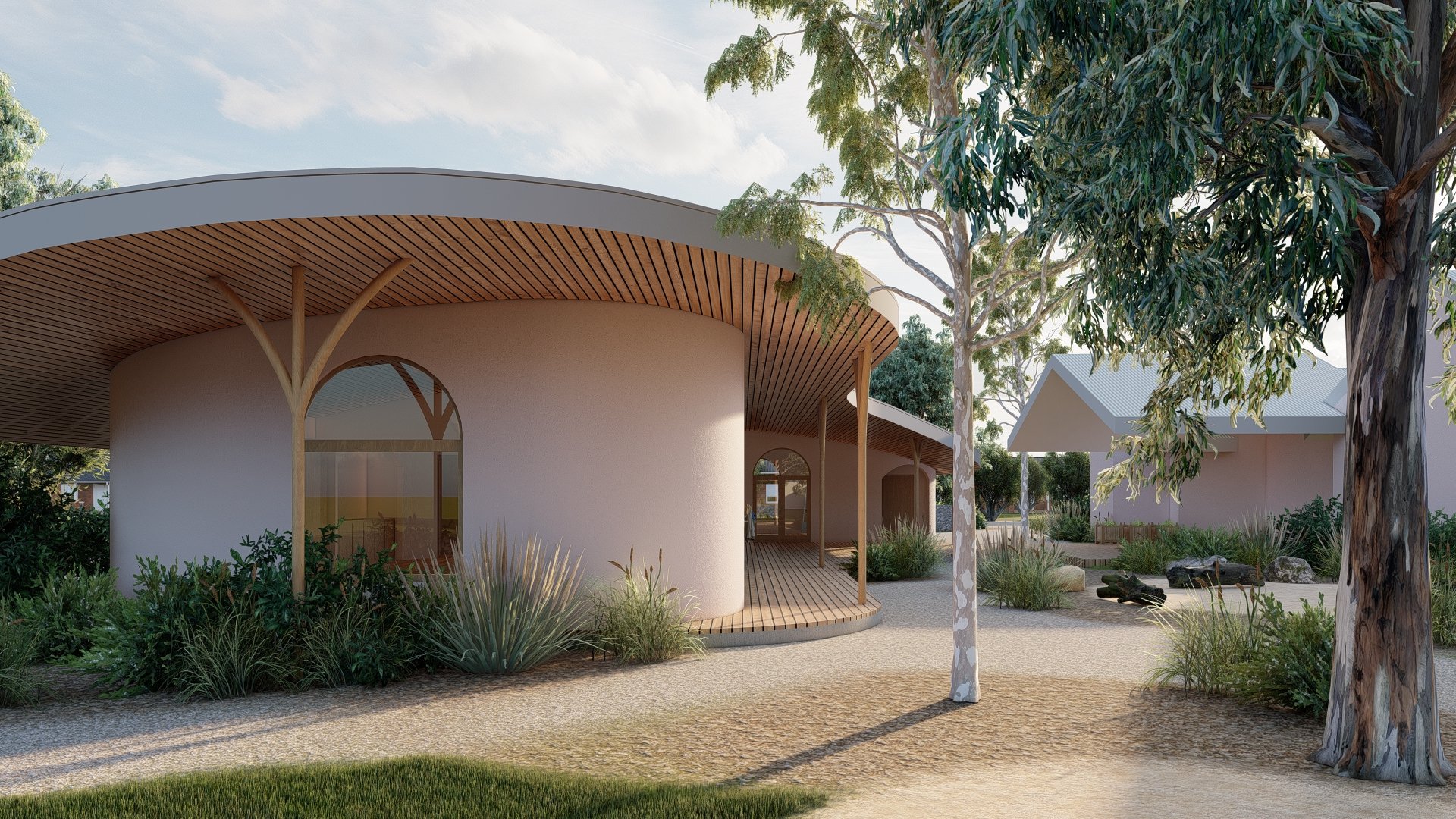
Concept Image - WCSS Kindergarten. Stage 3 Works
Architecture in Service of Pedagogy
The design responds directly to Steiner principles, prioritising warmth, rhythm, and connection to the natural world. Spaces are carefully proportioned and articulated to support the developmental needs of young children, with a focus on calm, legible environments that foster imagination and wellbeing.
Organic planning geometry, softened edges, and natural materials create a tactile and nurturing setting. Light is modulated to provide variation and atmosphere throughout the day, reinforcing a sense of time and season.
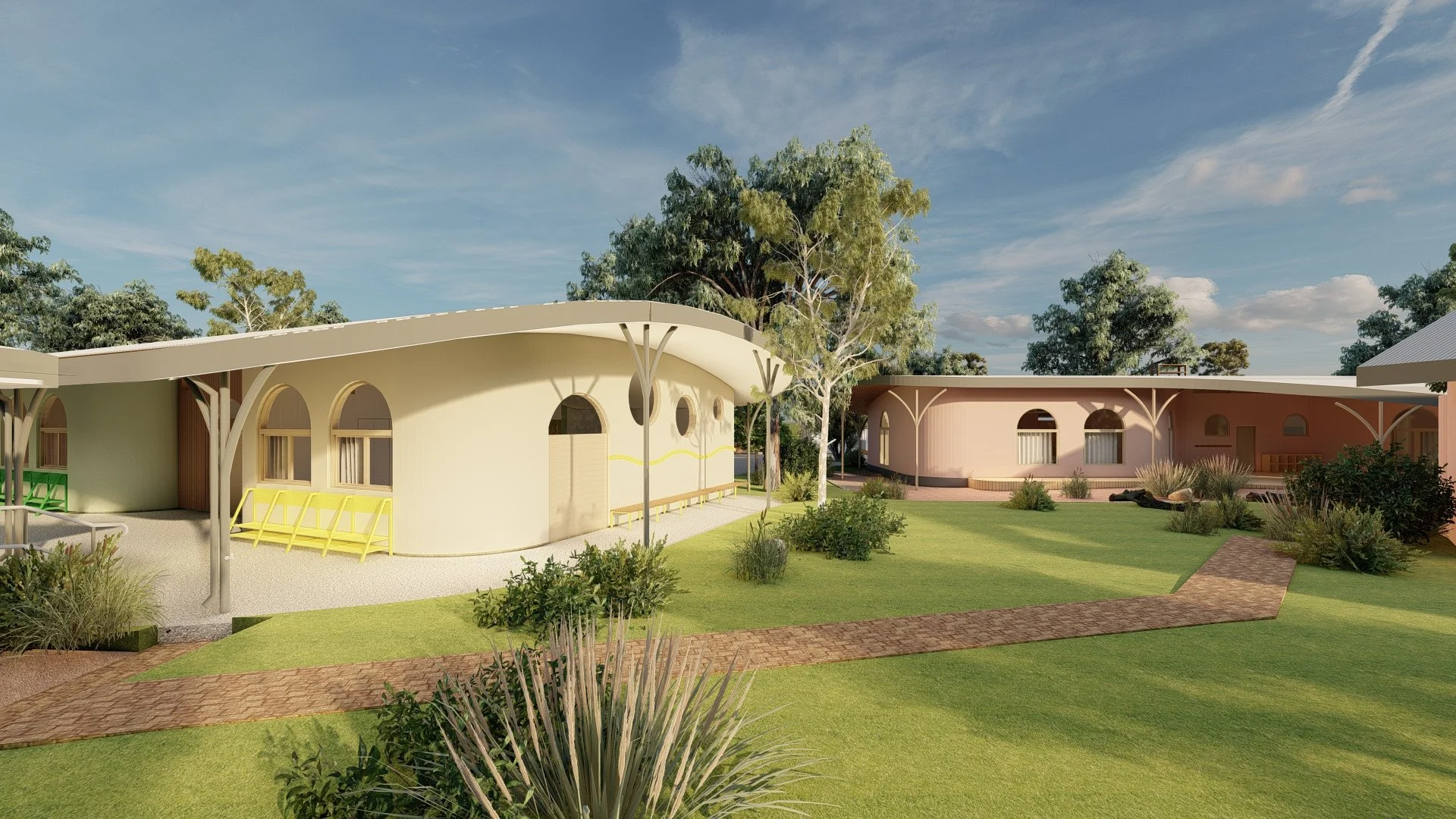
Year 3/4 Classrooms - Stage 1
Performance as a Foundation for Wellbeing
While the architectural language is intuitive and human-centred, the building is technically rigorous. Designed to Passivhaus principles, the kindergarten achieves:
Consistent internal temperatures across all seasons
Continuous supply of filtered fresh air
Extremely low operational energy demand
Reduced noise ingress and improved acoustic comfort
For a learning environment, these outcomes are critical. Improved air quality and thermal stability directly support concentration, reduce illness, and enhance both student and teacher wellbeing.
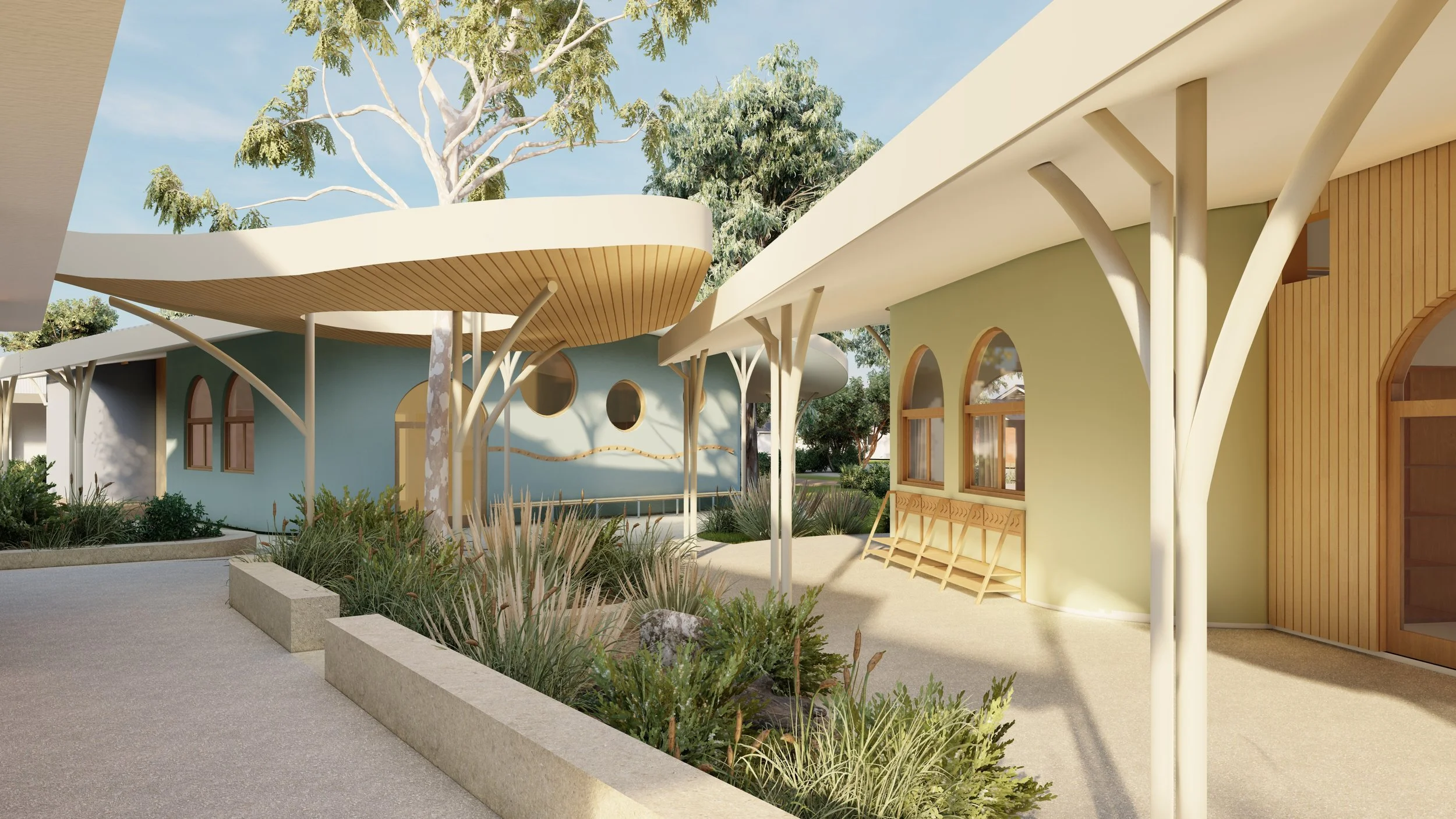
A Long-Term Investment in Community
The decision to pursue a high-performance building standard was guided by a whole-of-life perspective. While initial construction costs are higher than conventional approaches, the building delivers:
Lower operational and maintenance costs over time
Increased durability and resilience
A healthier environment for occupants
A strong point of differentiation for the school
For the school community, the project represents a commitment to quality—educationally, environmentally, and socially.
Delivered Through Collaboration
The project has been developed through close collaboration between the school leadership, project stakeholders, builder, and consultant team.
Early contractor involvement has informed buildability and cost planning, ensuring that the design intent is carried through to delivery.
Construction commenced in late 2025, with staging carefully considered to minimise disruption to the school’s ongoing operations. We are targeting Passive House Certification for Stage 1- the first certified eductaion project in Western Australia.